Is Warhammer 40k a critique of fascism or a dubiously ethical playground?
Written January 28th 2026
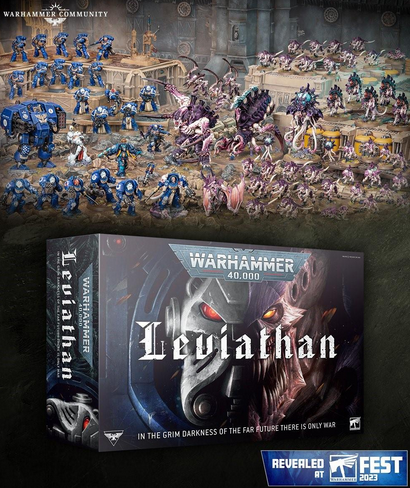
Figure 1 - Warhammer 40000 10th Edition Leviathan Box
Warhammer 40000, or Warhammer 40k for short, is a sci-fi franchise owned by Games Workshop. It started with and still focuses on a tabletop wargame, but has since diversified into video games, merchandise, roleplaying games and other media. 40k depicts a time (the 41st millennium) where humanity has spread itself across the stars. Life as an ordinary human in this time is short and dull, as the tagline puts it best: ‘In the grim darkness of the far future there is only war’. This phrase, being the tagline for 40k since its first edition in 1987, has coined the phrase ‘grimdark’ which is accepted as a term that captures the essence of 40k along with gritty stories more widely.
Many people have differing opinions on what grimdark is but generally they all give a similar description. Liz Bourke in a review of The Dark Defiles by Richard Morgan, describes it as ‘gritty realism’ and ‘attempt[ing] to overturn long-established heroic tropes’. She also goes on to describe it as ‘the valorisation of darkness for darkness's sake, into a kind of nihilism that portrays right action […] as either impossible or futile’[1]. More relevant to 40k however is what Phil Luke says about grimdark, specifically in reference to 40k: ‘this phrase [grimdark] introduced players to a deliberately excessive dystopian universe where humanity wages endless wars against aliens, demons, and itself’. Phil Luke also says that it is ‘crucial to understand […] that Warhammer 40K began as parody’, ‘a satirical exaggeration of dystopian fiction, military sci-fi, and gothic horror pushed to absurd extremes’[2]. One example of this comes from the first edition rulebook: in humanity, there exists Psykers, people who can see beyond the plane of normal reality – real psychics essentially. They are forcibly recruited by the Imperium to either act as navigators through interstellar travel, message senders, or to be consumed by a machine that requires countless psykers to be sacrificed every day in order to keep space travel possible. ‘Given up to the weird machinery that surrounds the Master of Mankind, their souls will be gradually leeched from their bodies to feed the emperor’s spirit. Hundreds must die in this way every day if the Emperor, the Imperium and humanity are to survive.’ (Pg. 138)[3]
It would be fair to say that Phil Luke’s assessment of 40k as parody is accurate, however I would go further by saying 40k has also, for most of its existence been a criticism of fascism. The Imperium of Man, in the universe of 40k, is the single galactic empire that humanity is united by. The Imperium, by the 41st millennium, qualifies for a handful of Umberto Eco’s 14 traits of ‘Ur-Fascism’, including the cult of tradition, a fear of difference, use of Newspeak and most other criteria.[4]
Fast forward to today, and Warhammer 40k is the largest miniature wargame in the world.[5] It has changed a lot in this time: in miniature design and in the stories it portrays. With this essay, I want to ask whether Warhammer 40k still an effective satire of fascism, or whether that commentary has been lost in the effort of making money. It is known that fascists will adopt fictional depictions of fascism, even if they are negative. This has been shown by the way that the real life Hammerskins group took their imagery from Pink Floyd’s The Wall (1982). An argument that some may bring up here is that this attention from fascists, in media depicting them, is eventual and will always occur. However, this is a simplification – Warhammer 40000, through its simplistic or non-existent critique in its key pieces of media, has made a piece of media that fascists feel they belong in.
I will prove this by evaluating real life anti-war media and how it often glorifies the wars it seeks to denounce. I will compare the Star Wars show Andor to 40k, pointing out a smaller scope of story can help make a meaningful critique. Then, going on to talk about the game Space Marine 2, and how its pro-imperium story beats undermine 40k’s wider satire. I will then analyse the various media within 40k using the framework of Darko Suvin’s writing about Cognitive Estrangement. Finally, I will talk about the miniature design and how it has affected the otherwise present critique.
Chapter 1 – Base Narrative Analysis
While it may be true that anti-war media is not automatically anti-fascist media, the two are connected. There is a pervasive link from fascism to war, mentioned briefly in Umberto Eco’s writing[4], saying that for the Ur-Fascist, ‘life is permanent warfare’. With the historical precedent of fascists starting war and the logic ‘might makes right’, often employed by fascists, it is worth looking at wider anti-war media.
It is reported that the French filmmaker François Truffaut said that it is impossible to make a narrative anti-war film, due to the sanitisation and glamourisation that comes naturally with a film production. This assessment is accurate and the same can be said about the multimedia depictions of war in the 40k universe. When Stanley Kubrick made Full Metal Jacket as an anti-war film, in response to the Vietnam War, it became culturally recognised as a film that captured the emotions of the American troops in Vietnam. Contrary to expectations, considering its brutal and violent contents, this film anecdotally gave people reasons to enlist. The drill instructor in the movie (who is also a drill instructor in real life), spoke as much in a book years on. "Even today, seventeen years later, there's not a day goes by on the base but what at least one person doesn’t come up and tell me I'm the reason they're in the Marine Corps. Full Metal Jacket was their motivation. I think that movie, The D.I, and Sands of Iwo Jima were probably the most influential pictures of all time as far as recruitment goes"[6]. There is a possibility that people who enlisted because of Full Metal Jacket, were going to enlist anyway. Despite that, this shows that media criticising war, often accidentally promotes it. The mere act of framing and platforming warfare makes it special and worthy of reverence to a to the audience. This can be applied to Warhammer 40k’s depiction of fascism: people often assume that if a depiction of war is gritty, the depiction is anti-war. That is a notion that should be challenged: the fact that the depiction is fictional (or dramatized), means that there is a large distance between the audience and the story. That distance turns the real-life horror of warfare, into a story with characters in it. These stories of war turn into drama, into entertainment upon fictional depiction. This entertainment sets the dangerous groundwork of setting war as the norm, or as exciting.
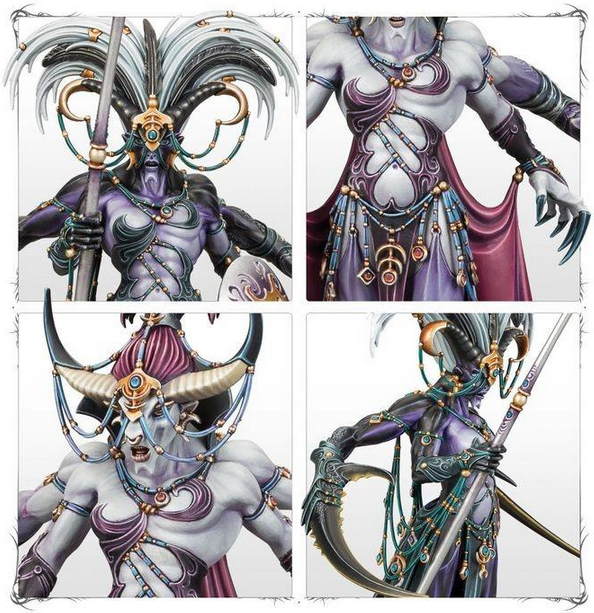
Figure 5 A 'Keeper of Secrets' Slaanesh Daemon
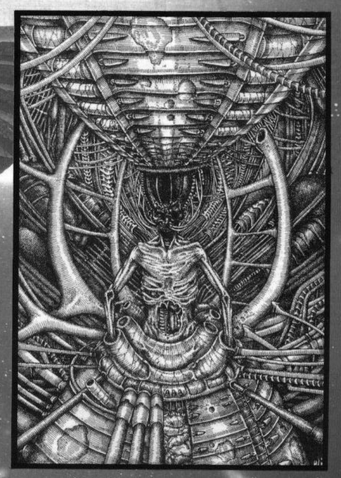
Figure 2 - The Emperor of Mankind in the Golden Throne, as seen in Warhammer 40k Rogue Trader Rulebook (1987)
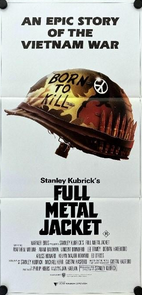
Figure 3 A poster for Stanley Kubrick's Full Metal Jacket - Notice it calls it an ‘epic’ story.
There is a concept in Warhammer 40k, that there are ‘no good guys’. Usually when people say this, they point to the fact that the Imperium is a fascist, xenophobic, genocidal empire – rightfully so. However, the rest of live in the universe is just as bad, or worse. From the Drukhari, who are slaving, murderous space pirates who turn people into flesh amalgamations. To even the T’au, who, despite appearing to be a good people, are just as warmongering and expansionist as the Imperium. The notion of selecting a faction in this universe as a ‘favourite faction’ has you choose between evil factions and worse factions; and (unless you choose your army based on liking the models, the lore, etc), a certain amount of people will choose the Imperium because they are ‘less’ evil. The problems truly begin when someone misinterprets ‘less evil’ as ‘good’. The fact that some factions are portrayed far worse than others in mainstream 40k media proves that the concept of ‘no good guys’ in 40k is reductionist. It fails to account for people choosing ‘the lesser of two evils’ and being able to – with the help of the narrative’s poor focus – glaze over the horrors the Imperium commits. This ignorance allows people to push the idea of the Imperium being the ‘good guys’.
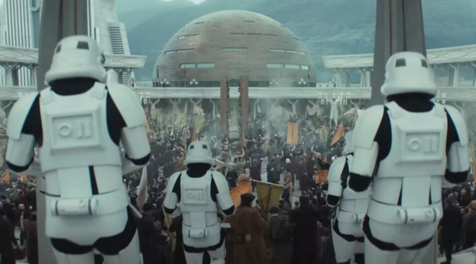
Figure 4 A still from Star Wars show Andor, S2E8 'Who are you?', showing the Ghorman square moments before a massacre begins.
Andor is effective anti-fascist media partially because it takes the perspective of a few normal people in rebellion against the Empire, keeping the scope of the story limited. A review by Glen Weldon puts it well, ‘In one corner of the Star Wars galaxy, you've got […] Sith Lord […] crackling with Force-lighting as he fries Jedi Master Mace Windu to a crisp’. How Andor differs from that is that ‘you've got the bootlicking, low-level, fascist toady Syril Karn, standing at attention while he nervously answers his supervisor's question about whether he's modified his uniform’.[7] 40k is more the former than the latter, the aesthetic exaggerated and more like fantasy. Fascists did not flock to Andor, because it gave the rebellion and the people within it, the stage for the audience to relate to. It could also be said that the focus and tone of 40k would never allow a rebellion in the Imperium that wasn’t already corrupted by demons or aliens. Such would be out of line with the standard conventions for grimdark, as established earlier. This is another way that 40k makes a pro-fascist read on the Imperium easier, with every rebellion without exception, caused by an alien or demonic threat.
The video game Space Marine 2, is fairly typical for 40k media currently, and could be used as a case study for the current state of 40k. Coming out in 2024, it was very popular[8], doubling the first week player count of 40k Darktide[9], another recent game. The game sees you take the role of a Lieutenant of a Space Marine legion, of an army of superhuman soldiers. You travel planets and murder hordes of bugs and demons. This game, as with war films like Full Metal Jacket, glorifies the violence massively, with no critical commentary on the Imperium. This glorification and heroics make the player feel like they are on the right side, eradicating threats to humanity. This is largely true, as the mass of enemies you fight in the first half of the campaign are a hivemind that exist only to consume. The other main enemies are Chaos Space Marines, fellow warriors who turned to the side of demons countless centuries ago. So, as mentioned before, the ‘less bad’ Imperium is being put against much worse enemies, making the Space Marines look good. The few humans depicted are humanised if they are on your side, or immediately shot in the head, without a second thought, if they are not. I find that this article written by Dorian Dawes, talking about 40k generally, puts the content in Space Marine 2 best ‘Too often the Imperium is portrayed as the Nazis wished to see themselves in Triumph of the Will. Heroic music and epic marches accompany waving banners and men charging bravely into battle. The cries of “FOR THE EMPRAH” are done with inspirational beats’.[10]
Another way that 40k allows for real life fascists to thrive within the lore, is through the depiction of queerness in the setting. The main appearance of queerness in Warhammer 40k, is through the demons of the chaos god, Slaanesh.
Conclusion
Slaanesh demons are deliberately androgynous, described as alluring and sensual. They are also extremely violent and are used throughout the lore as one of the main evil factions for the Imperium to fight. On the other hand, you have how the Space Marines are physically portrayed. Massive humans, yet still extremely muscled and conventionally attractive men, who are noble and brotherly yet brutal and stoic. This difference in the portrayal shows the heroic, manly warrior fight against the queer, androgynous, ‘degenerate’ demon. This is another point at which the setting of 40k fails at critique of fascism- creating a story that depicts how fascists see the real world.
More recently, there are occasional glimpses of good critique in 40k media. For instance, the 2005 novel Fifteen Hours, tells a grimdark story that serves as a terrifying depiction of living as a normal person in 40k. The terrified seventeen-year-old guardsman, Arvin Larn gets sent to war against the Orks, one where the average lifespan for a guardsman is only fifteen hours. After all the fighting and brutality of the war in the book, it ends with Larn dying, happy that he beat the fifteen hours average. Much like Andor, the true power in Fifteen Hours’ writing comes from the choice to focus on a smaller individual, someone we can relate to, rather than a superhuman Space Marine.[11]
Chapter 2 – 40k and Cognitive Estrangement
The Canadian academic Darko Suvin, wrote about sci-fi and its key differences from other fiction, in his book Metamorphoses of Science Fiction[12]. In this, he talks about the idea of cognitive estrangement, which labels the way that sci-fi uses a (usually futuristic) innovation in fiction to estrange us from our current reality. This estrangement allows us to engage with SF content as a metaphor, as a mirror, for our current day world. Suvin referred to this fictional innovation as a novum. A perfect example would be how in Blade Runner, the replicants are the key novum, a thought experiment to question the nature of AI and of humanity itself. Suvin went on to say that cognitive estrangement is what ‘differentiates SF from the “realistic” literary mainstream’, also distinguishing it from the ‘folktale and the fantasy’.
While being far from conclusive by itself, can be used to identify whether a story has clear critique or metaphor. The idea of cognitive estrangement is one that can tell whether a piece of media is merely fantasy with no internal logic, or a piece of true sci-fi media with a pervasive metaphor to reflect to our current day. Suvin says in Estrangement and Cognition that fantasy is ‘inimical to the empirical world and its laws.’ [13] Meaning that he classifies fantasy as something that discards too many laws of the real world, ruling out effective metaphor in this manner.
Fifteen Hours has the clear novum of the aliens they are fighting against and the fascist empire that the main character lives in. This raises the cognitive estrangement: “What if a normal human in a fascist empire was forced into a meat grinder of a war, against massive terrifying aliens”. Which is a valid and intriguing thought experiment that the book executes well. Meanwhile it could be argued that Space Marine 2 and a lot of other contemporary 40k media has no clear novum. The plot entirely denies the concept of a novum, as its focus is on telling a story. It would be more suited to be described as ‘a fantasy story, which dons sci-fi clothes so as to make use of the aesthetics of the genre, but is not itself true science fiction’, as Eóin Dooley describes the Star Wars universe in his essay ‘Why Does Andor Feel Different?’[14]
It is worth looking at this assessment of Andor though, as Andor has been one of the best examples of how to make a good critique of fascism in fictional media. Dooley points out the materiality of Andor. Specifically, the materiality of these futuristic objects found in sci-fi, is important to be explored for it to cause cognitive estrangement. What he means by materiality is how investigating these objects and concepts related to the novum is important and how ‘a fantastical novum may prohibit cognitive estrangement’, by being unavailable for analysis or contradictory. This idea about a fantastical novum is relevant, as certain parts of the 40k universe are treated as novums yet are unavailable to be analysed. The existence of unknown forces like the demons of Chaos, Psykers and the warp can absolutely be treated as fantastical novums, preventing clear rules to be defined about them. This then invalidates many attempts to execute cognitive estrangement in the 40k universe, as you have to eliminate many of these story relevant points.
We can analyse that Fifteen Hours works so well because of the more grounded novums. By the already preestablished knowledge of the universe in 40k we know that Orks are brutal, murderous and massive aliens. On top of that, we also know that the Imperium is dangerous to live in, where the deaths of people have no true effect on the world. These two facts, these novums, are what the cognitive estrangement that Fifteen Hours is built upon. Which proves that not all 40k media is devoid of traditional sci-fi appeal.
Chapter 3: Aesthetic Analysis
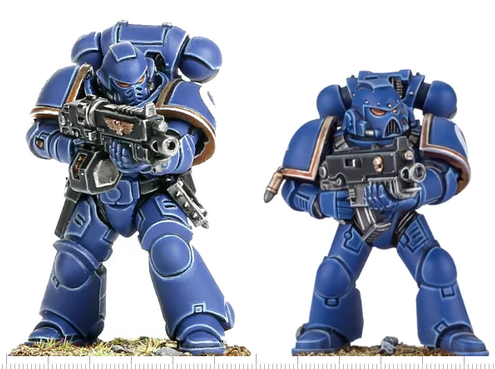
Figure 6 A 'Primaris' Space Marine, versus a 'Firstborn' Space Marine
It is also worth talking about the painting style used on the miniatures in the official Warhammer box art. The ‘Eavy Metal’ painting style works well on the messy and comedically proportioned miniatures of the 80s. Now, the realistically proportioned miniatures begin to look like toys in this paint style, rather than miniatures of a violent and cruel universe. This makes a lot of sense since Warhammer has a specific outreach program to secondary schools in the form of Warhammer Alliance[16]. This leads to the conclusion that Games Workshop is sacrificing the grittier elements (fascist critique, books like Fifteen Hours). Exchanging them for marketable, uncontroversial media (like Space Marine 2 and the aesthetic style of the miniatures being made currently), all while the story and tone of their IP becomes more and more welcoming to fascists.
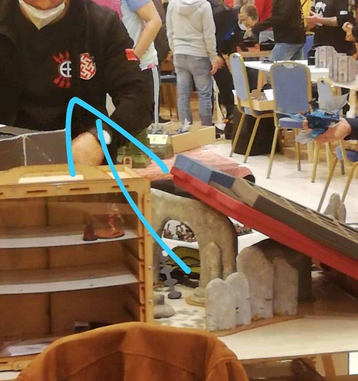
Figure 8 Person in Neo-Nazi iconography during the GT Talavera tournament[16]
In 2017, Games Workshop made a huge design change for their main tabletop army of 40k, the Space Marines. This design change was very controversial at the time as it bought along new miniatures that would be more competitive in the tabletop game, at the price of replacing your old miniatures. Certainly one aspect for the space marine product line refresh, was a financial one.
While that is the case the change in scale and proportions changed the commentary around the Space Marines. In 40k, Space Marines are taken from their families in childhood, bio-engineered, put under countless surgeries, brainwashing and military training to get them to the point of being a Space Marine. This is glossed over in most media and instead Space Marines are treated as infallible, heroic good guys who come along to save the day. The comparative short and stubby design of the firstborn marine depersonalises them, makes them one out of an army of thousands. Whereas the larger Primaris marine looks more of an individual – not just a soldier, but a hero. The posing also follows this line of reasoning, generally Primaris kits have much more dynamic and action-packed posing, further glorifying them. Meanwhile, firstborn kits often have a similar pose to the one shown in the image above: gun at chest, about to shoot. The more heroic approach to miniature design here, undermines the fascist critique of an identical soldier out of thousands marching to die a death of no consequence.
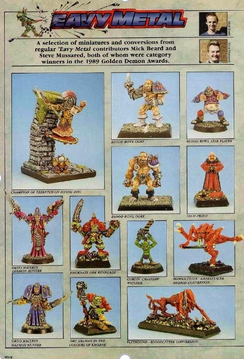
Figure 7 Painting showcase page from White Dwarf 118
Warhammer 40000’s depiction of the Imperium used to be an exaggerated, bloody, brutal critique of fascist empires and those that subscribe to them. However, as time has gone on, 40k has grown immensely, and possibly in the aims of maximising their customers, Games Workshop has left the more political aspects of 40k behind.
This reached a climax in 2023, where a man signed up to a 40k competition in Spain, with the clothing shown above on. Enrolling in the tournament as ‘Austrian Painter’ and with the organisers being unable to remove him from the tournament because of Spanish free speech laws, there was much controversy. The community had an immediate and understandably strong response to this, with the official Warhammer article titled ‘The Imperium is Driven by Hate. Warhammer Is Not.’[15] It goes on to say that ‘There are no goodies in the Warhammer 40,000 universe’, ‘Especially not the Imperium of Man’. As well as this, they specifically say that ‘the Imperium of Man is satirical’. The points raised in this essay about morality in 40k shows that even the company is unaware of the simplifications they are making. Just because they call the media satire, does not mean it automatically is.
Fascists will always flock to media depicting them, even if that media depicts them poorly. With the constant portrayals of the Imperium as a heroic defender of humanity in the face of senseless evil, it should be no surprise that online and real-life fascists flock to Warhammer. The current state of Warhammer 40000 gives the fascist gives them the exact type of story they want.
Conclusion
[1] Bourke, L. (2015) The Dark Defiles by Richard Morgan. Available from: http://strangehorizons.com/non-fiction/reviews/the-dark-defiles-by-richard-morgan/ [Accessed 11 December 2025].
[2] Luke, P. (2025) A History Of Grim Dark. Available from: https://costofcreativity.medium.com/a-history-of-grim-dark-0a8682fb1b6e [Accessed 11 December 2025].
[3] Priestley, R. (1987) Warhammer 40,000 Rogue Trader. Nottingham: Games Workshop Ltd. Internet Archive [online]. Available from: https://archive.org/details/warhammer-40-k-rogue-trader-rulebook/page/n131/mode/2up [Accessed 11 December 2025].
[4] Eco, U. (1995) Ur-Fascism. Available from: https://www.nybooks.com/articles/1995/06/22/ur-fascism/ [Accessed 11 December 2025].
[5] ICv2. (2024) TOP MINIATURES LINES – FALL 2023. Available from: https://icv2.com/articles/markets/view/56556/top-miniatures-lines-fall-2023 [Accessed 12 December 2025].
[6] Smith, L. (2006) The Few And the Proud: Marine Corps Drill Instructors in Their Own Words. New York City: W. W. Norton & Company.
[7] Weldon, G. (2022) 'Andor' soared — it was about the force, not The Force, of the Star Wars universe. Available from: https://www.npr.org/2022/11/23/1137826237/star-wars-andor-finale [Accessed 17 December 2025].
[8] SteamDB. (2025) Warhammer 40,000 Space Marine 2 Steam Charts. Available from: https://steamdb.info/app/2183900/charts/#max [Accessed 13 December 2025]
[9] SteamDB. (2025) Warhammer 40,000 Darktide Steam Charts. Available from: https://steamdb.info/app/1361210/charts/#max [Accessed 13 December 2025]
[10] Dawes, D. (2018) Let’s talk about Warhammer 40k. Available from: https://medium.com/@RealDorianDawes/lets-talk-about-warhammer-40k-830b27686a6e [Accessed 15 December 2025]
[11] Scanlon, S. (2005) Fifteen Hours (Warhammer 40, 000 S.). Nottingham: Black Library.
[12] Suvin, D. Metamorphoses of Science Fiction: On the Poetics and History of a Literary Genre. New edition. Lausanne: Peter Lang
[13] Suvin, D. Estrangement and Cognition. Available from: http://strangehorizons.com/non-fiction/articles/estrangement-and-cognition/?ref=red-futures-mag.ghost.io [Accessed 15 December 2025]
[14] Dooley, E. (2025) Why Does Andor Feel Different? Available from: https://www.redfuturesmag.com/publications/andor-analysed-part-1/why-does-andor-feel-different [Accessed 15 December 2025]
[15] Warhammer (2021) The Imperium Is Driven by Hate. Warhammer Is Not. Available from: https://www.warhammer-community.com/en-gb/articles/1Xpzeld6/the-imperium-is-driven-by-hate-warhammer-is-not/ [Accessed 15 December 2025]